Why is the ground still "cold" when the floor heating is turned on?
In the impression of many users, the floor of the home must be hot after the installation of underfloor heating, so there will be many users will take off their shoes and use their feet to feel the temperature of the ground when it turns on. If the ground is warm, then they think underfloor heating is effective; on the contrary, it’s must be something wrong with the underfloor heating.

Once a friend asked, "My underfloor heating is clearly on and the inside of my home is warm, why is the floor still cold?"
To answer this question it is important to figure out how we perceive an object as hot or cold.
When we touch an object that is lower than our body surface temperature, the heat will be transferred from our body to the cooler object, resulting in a lower temperature in the contact area of the body, at which point we will feel that the object is cold.

It's the same principle that makes people's hands feel warm when they hold a cup of hot water and cold when they hold ice.
For the foot, which degree of temperature will make it feel cold?
Indoor temperature of 20 ℃, for example, the surface temperature of the human foot is about 28 ℃, if the ground temperature is lower than 28 ℃, we will feel the ground a little "cold".
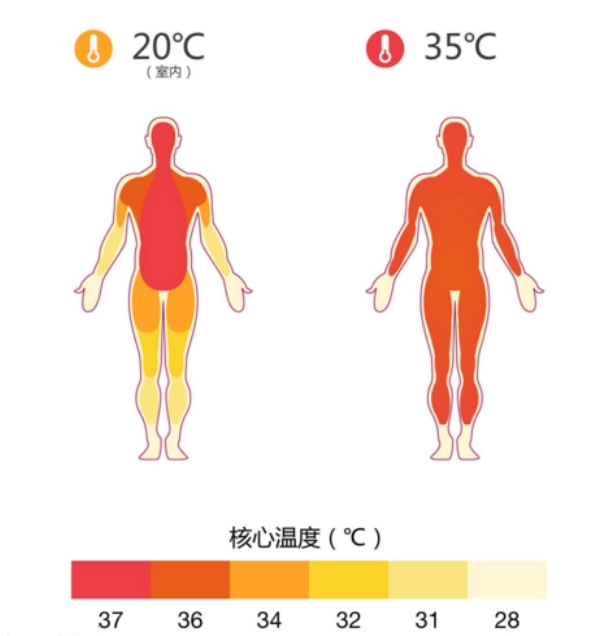
Going back to underfloor heating, it generally only controls the room temperature, regardless of the floor temperature.
Most underfloor heating uses a Room Temperature Thermostat, which only detects the air temperature at 1.4 metres above the ground. Once the air temperature in the room reaches the set temperature, the thermostat will give a command that the hot water no longer enters the underfloor heating cycle, at which point the ground temperature first starts to decrease.
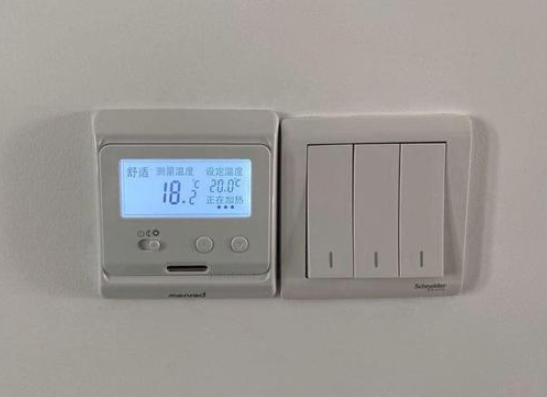
Underfloor heating thermostat mostly detects air temperature
When the ground temperature decreases, the air temperature will also decrease. If the thermal insulation performance of the house is very good and the heat loss in the room is very small, then the air temperature will drop very slowly. It may happen that the indoor temperature does not change much, but the ground is already lower than 28℃. At this time, touch the ground with your feet, you will naturally feel a little "cold".
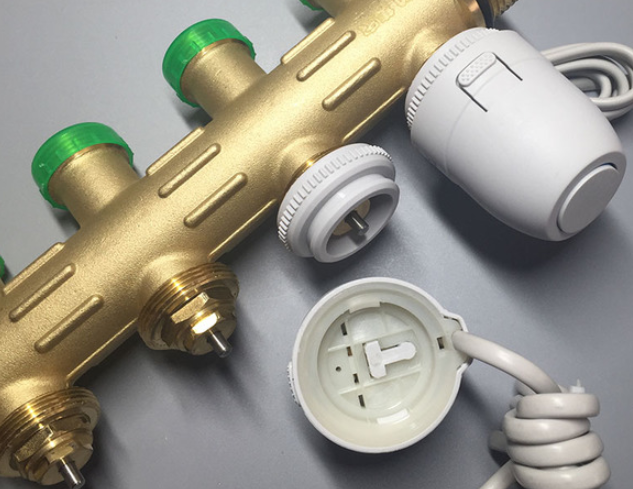
The manifold controls the flow of hot water in the underfloor heating cycle
So even with underfloor heating on, the floor may be "cold".
However, this situation is generally less, and mostly at the beginning of winter, when the outside temperature is still relatively high, the room heat loss is relatively small, and the room temperature is also easy to maintain. When the temperature is further reduced, in order to protect the temperature of the room, the floor heating will also increase the operating hours, the ground "cold" situation rarely occurs.
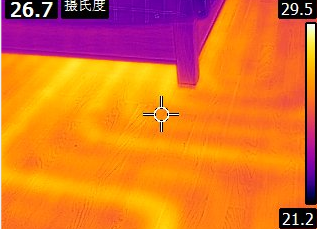
Underfloor heating floor temperature shown by infrared imager
If you want the ground to be always hot, there are two ways to solve it: one is to use a floor temperature thermostat to always control the ground temperature at the set temperature;
The other is to adjust the set temperature of the floor heating very high, such as 30°C. Generally, due to various reasons such as heat dissipation in the house, it is difficult for the indoor temperature to reach 30°C. At this time, hot water will always enter, and the ground will always be hot. Of course, the energy consumption will be higher. If it is acceptable, you can consider using it.