What to do with the base floor before installing dry underfloor heating?
During the renovation process of dry floor heating, the most important thing is the preliminary work of the base ground. If the base floor is not treated properly, it will affect the construction or later use. At present, there are two ways to deal with the basic ground, one is to do the ground overhead or do wooden keel leveling. Another way is the most commonly used way, non-overhead base leveling treatment.
In this issue, we focus on the non-overhead layer leveling treatment. There are three main ways to level this kind of ground, respectively: cement-based self-leveling, cement mortar leveling, gypsum-based self-leveling.
Cement-based self-leveling
Using cementitious self-leveling requires flatting the entire room at one time, it is not allowed to only fill the uneven areas. The advantage of cement-based self-leveling is the thin construction level, short drying time, and basically 24 hours after the next step in the construction. After the construction is completed, the surface has no joints and dust with high flatness.
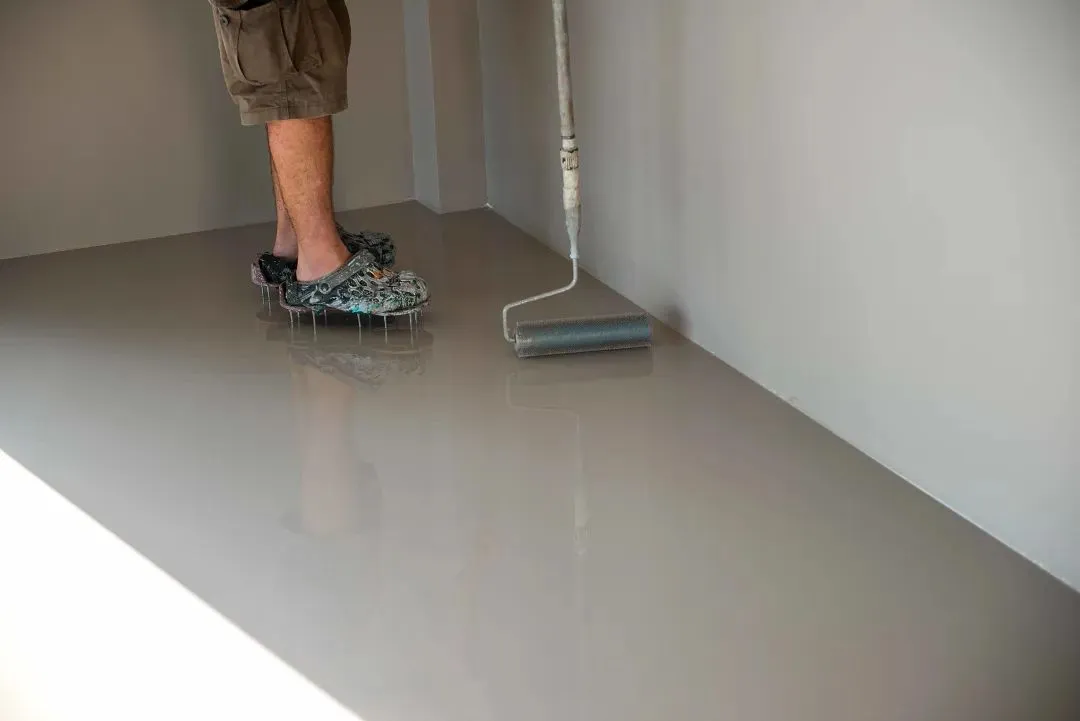
The defect of cement-based self-leveling is that the high shrinkage rate, if the maintenance is not appropriate, prone to cracking. Secondly, it is also more demanding for the construction, and cannot be implemented in the space of strong ventilation, otherwise too dry will also cause cracking. In addition, it is difficult to level the ground with a large difference in height at one time, and it is necessary to level the ground with concrete or cement mortar first and then use cement self-leveling, which increases the construction process and labour management costs.
Cement mortar leveling
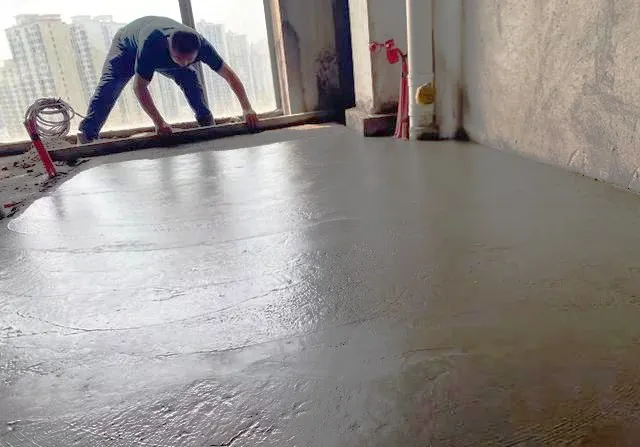
Traditional cement mortar leveling has a wider range of applications. It can be used in the case of large differences in room flatness, but also can be used for small-scale leveling. Cement mortar is generally about 3-5cm thick, so it is unable to achieve a thin layer of precise leveling. In addition, if the proportion of cement mortar is not correct, it is easy to cause the ground drum and sand. After completion, it needs to be sprinkled with water to keep it moist, and it should be maintained for about 7 days before the next stage of construction.
Gypsum-based self-leveling
Gypsum-based self-leveling is also a common leveling method, applicable to the whole room or large area leveling, with good stability and excellent anti-cracking characteristics. Ordinary gypsum based on the original ground has certain requirements, need to do pre-treatment, leveling thickness is usually about 2cm to achieve fine leveling, the surface layer can also be done thinner. When choosing, you must identify the environmental friendliness of the raw materials. Many self-leveling products on the market use raw materials containing harmful impurities such as phosphogypsum and fluorogypsum. Long-term use may inevitably cause safety hazards.
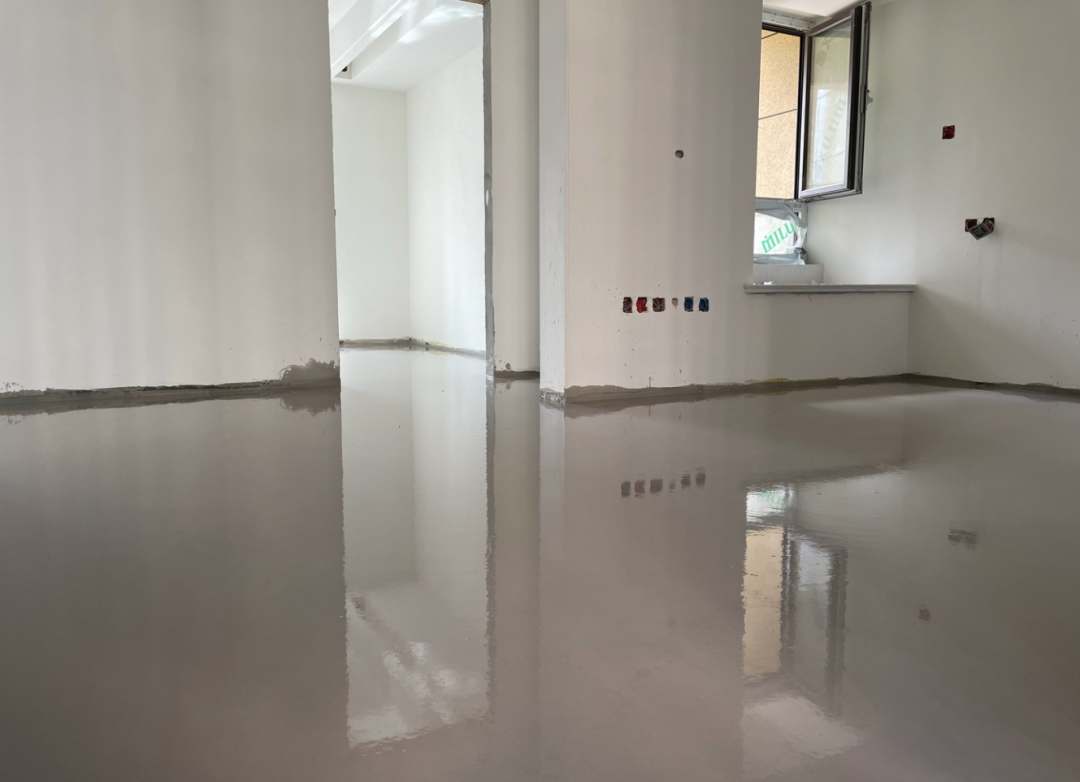
Usually, thick gypsum-based self-leveling can be constructed at one time without later maintenance. After the construction is completed, 4-6h can be walked on, directly on top of the wooden floor, PVC plastic floor and other decorative surface layer, widely used in the old building ground renovation, new building ground engineering backfill and leveling. Compared with traditional cement mortar, it can effectively reduce the building load and save the floor height.
Summary: dry floor heating laying for the ground flatness requirements are very high, so it is more recommended to use gypsum-based self-leveling to level, not only high precision leveling and good stability. After the completion of the work can do not crack, no hollow drum, no grey, and no maintenance, significantly reducing the time cost and labour costs. In addition, gypsum-based self-leveling thermal conductivity is relatively lower, for dry floor heating insulation effect will be better.