Seriously? Dry floor heating heats up fast and cools down fast?
It is said that dry underfloor heating heats up very quickly and the heating set temperature can be reached in 30-60 minutes. With such a fast heating speed, isn't the room cooling down very fast after switching off?
Users of heat radiators and air conditioning know that the radiator off after 30 minutes to feel cold, air conditioning off 10 minutes after the cold is obvious. So how long does it take for dry underfloor heating to feel cold after it is switched off?
Users who have done dry underfloor heating know that dry underfloor heating not only warms up quickly, but also does not lose the indoor temperature very quickly even after it is switched off, so the experience of daily use is very good.
ⅠThe rate of warming is related to dry insulation boards
The heating speed of underfloor heating is firstly determined by the heating capacity of the heat source. When the warming speed is not enough, just need to increase the water temperature, increase the combustion power of the wall-mounted boiler can be easily done to warm up fast, the room temperature to reach the ideal state. However, there are two problems here, one is the floor heating is a low-temperature heating, the general temperature of hot water should not exceed 60 ℃, too high a temperature will lead to thermal expansion of plastic pipes and accelerate aging. Secondly, for the two-connected home, the water temperature is difficult to exceed 45 ℃, especially after the winter outdoor sub-zero, the water temperature can be maintained at 40 ℃ is good. Therefore, the thermal conductive material of the floor heating module is the key to the speed of warming.
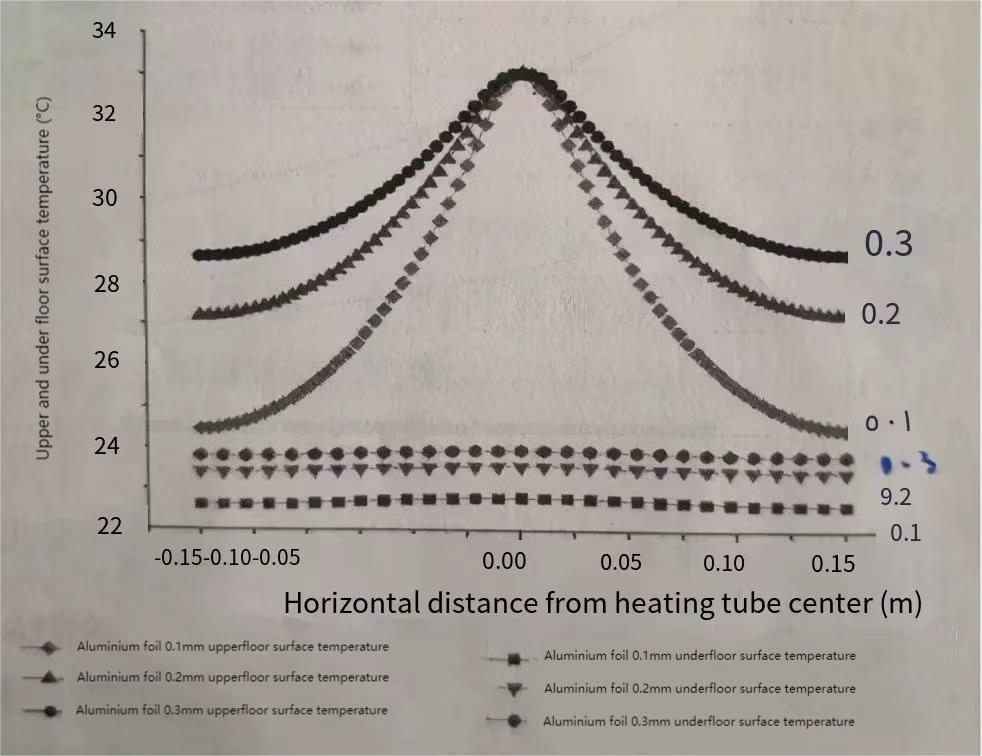
① The first element that affects how fast or slow the underfloor heating warms up is the quality of the dry underfloor heating aluminium panels. Adopting high-quality real aluminium, full thickness of 0.2mm and above, the effect will be better. If it is an alloy material with insufficient aluminium content, the heating effect will be greatly reduced. For pipes with a diameter of 16mm, the recommended thickness of the aluminium layer for dry underfloor heating is 0.3mm, below which the thermal conductivity and evenness of heat are poor.
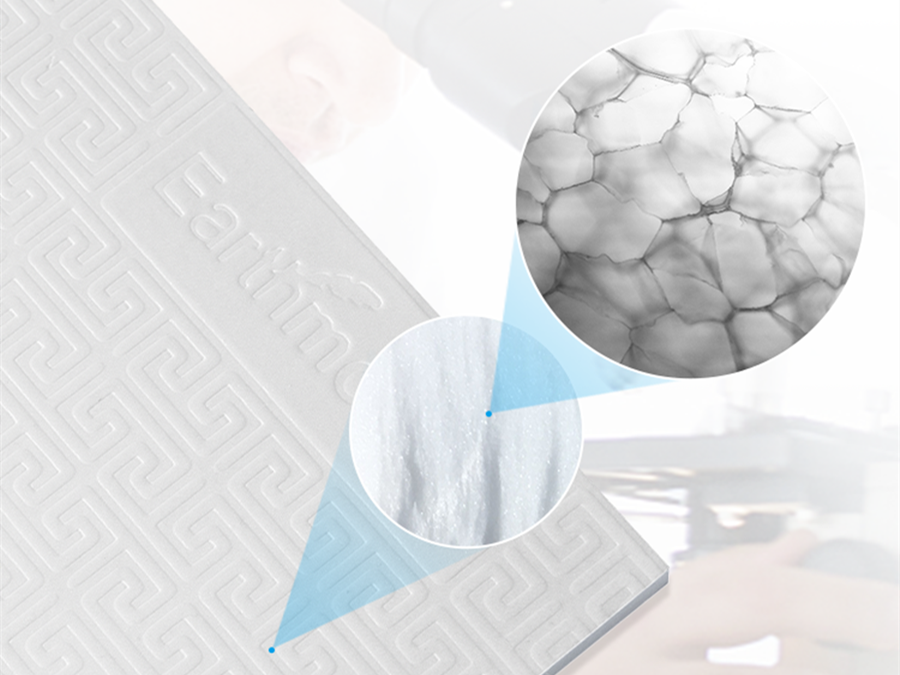
② Insulation material quality to meet the standard. Here you need two values up to standard, the thickness of the insulation board should be enough 3cm and above, the thermal conductivity must be 0.034 level. It can reduce the loss of floor warming heat, lock the indoor temperature, so that the room will heat up faster.
How can we tell the quality of the insulation material? You can ask the HVAC company to provide the relevant test report of the dry floor heating insulation board. In addition you can also identify according to the cross-section of the insulation board, high-quality insulation board after breaking the break should be clean, white, no odour, bubble holes uniform and dense. The poor quality is obvious brown spots, unpleasant odour, bubble hole coarse.
Ⅱ Dry floor heating warms up fast ≠ cools down fast
The biggest difference between dry underfloor heating and radiators and air conditioning is the different ways of heating. Air conditioning belongs to the strong convection heating, air mobility is very strong, the heat is mainly concentrated on the roof above. So open air conditioning not only dry mouth and tongue but also dizzy legs and feet cold. Such convective heating coupled with poor house insulation, heat loss is particularly fast. So turn off the air conditioning 10 minutes after the cold is obvious. Radiator heating, convection-based, heat radiation. The same will cause the air dry, easy to take away the human body moisture. The room temperature is barely maintained for about 30 minutes after switching off.
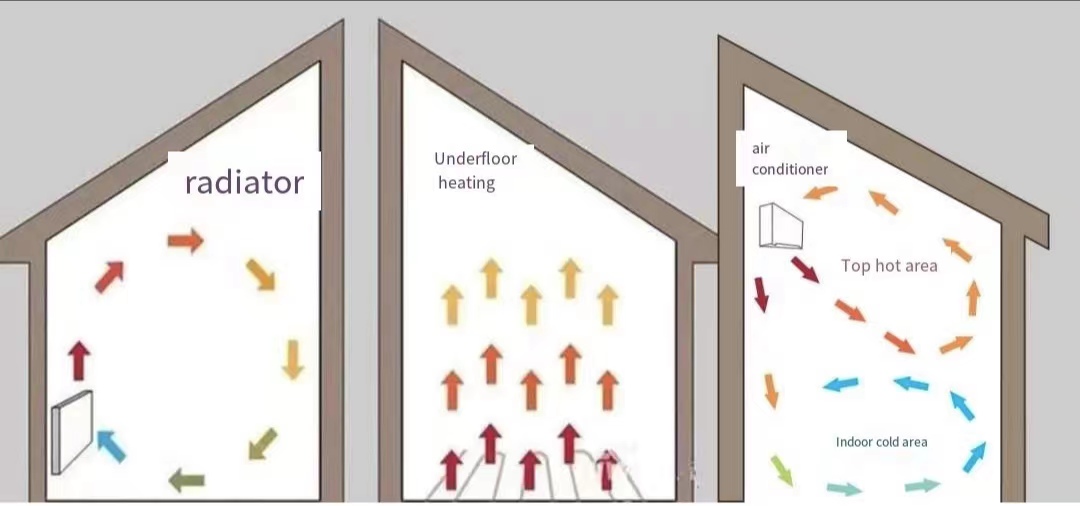
Dry underfloor heating will not be noticeably colder in the room for basically 2 hours after switching off compared to radiators and air conditioning. The fundamental reason for this is that dry underfloor heating relies on radiant heating, and thermal radiation will heat household items in the room more effectively. The heat of dry underfloor heating rises from the ground upwards, and the ground layer has a sufficiently thick insulation layer, which has a stronger heat preservation effect. So, dry floor heating doesn't get cooler faster just because it gets hotter.
Finally, whether it is air conditioning or heat radiator, the root cause of the rapid loss of temperature is caused by the overall insulation performance of the house is not good. If you do a good job of energy-saving windows and doors, external wall insulation, will effectively reduce energy consumption and heat loss rate.
For related reading, click here