Must look when installing underfloor heating! The latest underfloor heating backfill programme is here!
Can we backfill with self-levelling after wet underfloor heating has been installed?
Because a lot of people think that by backfilling with self-levelling, not only do they save money on levelling, but they can also put flooring or tiles directly on top of it and save on floor height, which is great indeed!
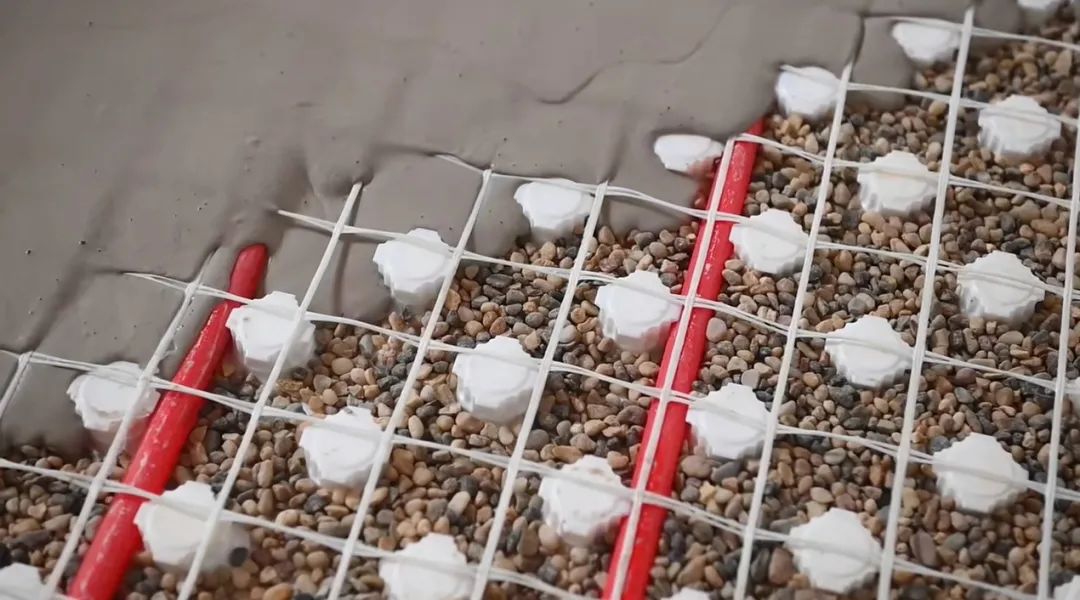
But is there any ‘hidden problem’ in this procedure? In fact, the backfill layer has only two functions: one is to even out the heat emitted by the pipeline; the other is to protect the pipeline and insulation board. Today we will show you a site example and its construction process.
- Location: Minhang, Shanghai
- Construction area: 45 square metres
- Construction material: Earthmother high thermal conductivity gypsum-based self-levelling
- Auxiliary materials for floor heating: Earthmother CN300 Castellated Panel
01Step 1, Ground Preparation
It is important to check whether the underfloor heating module is flat and tight, and to flatten the Fiberglass Mesh with tape if it is warped.
In the ground where line pipes are slotted, use styrofoam to fill the gaps and prevent self-levelling seepage.
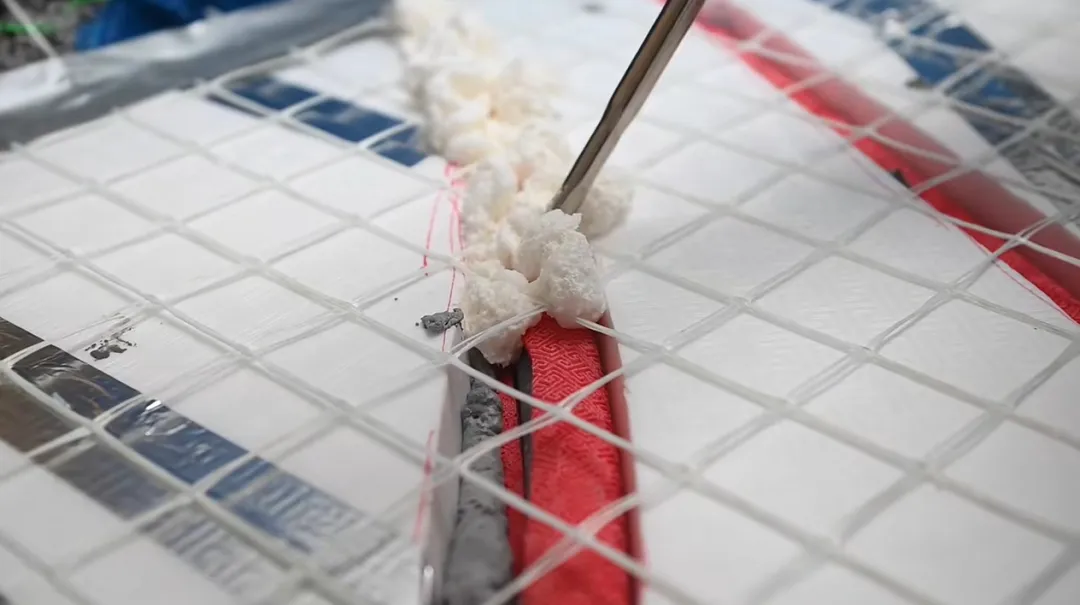
Dividing the construction section according to the function of the room, for the living room, balcony, bedroom, bathroom and other areas, do a well separated treatment, to prevent the flow of materials out of the room.
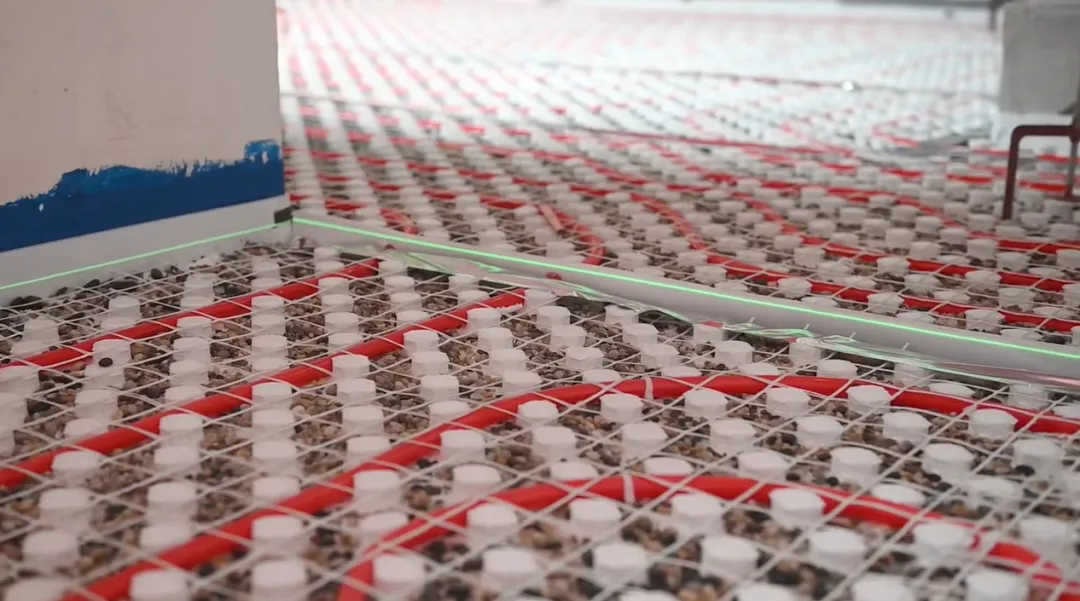
02 Step 2, Elevation Layout
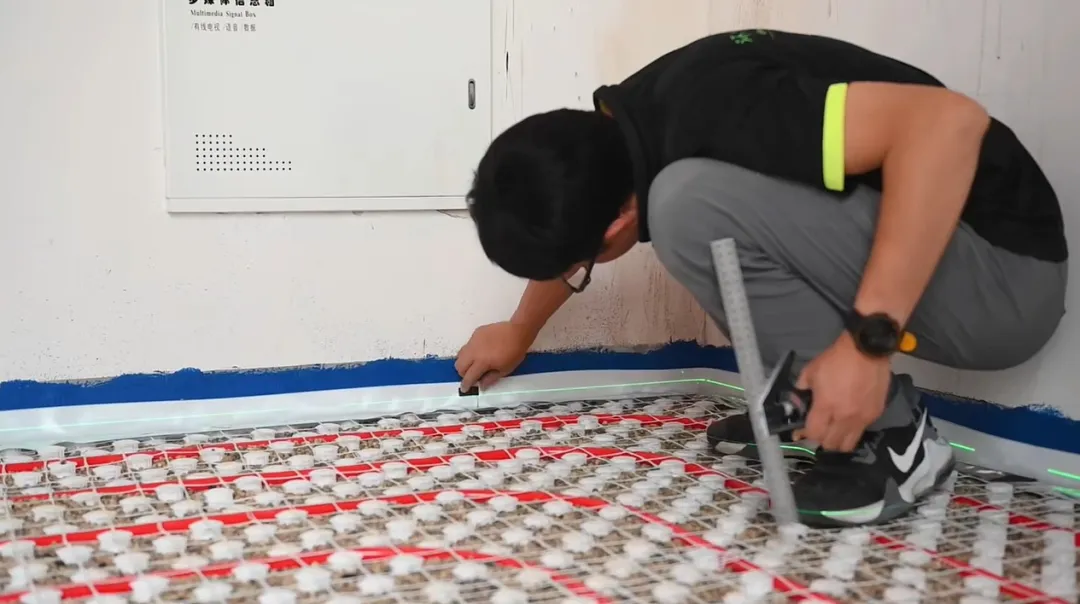
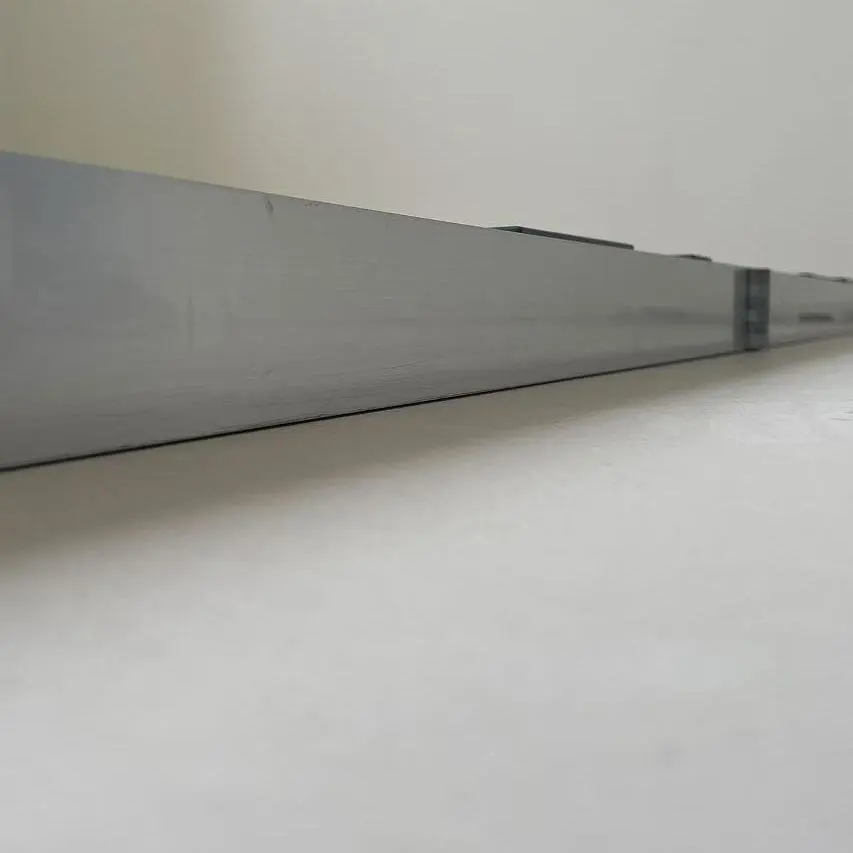
Use a laser level to mark the backfill height and stick elevation strips every 60cm along the wall to unify the leveling height.
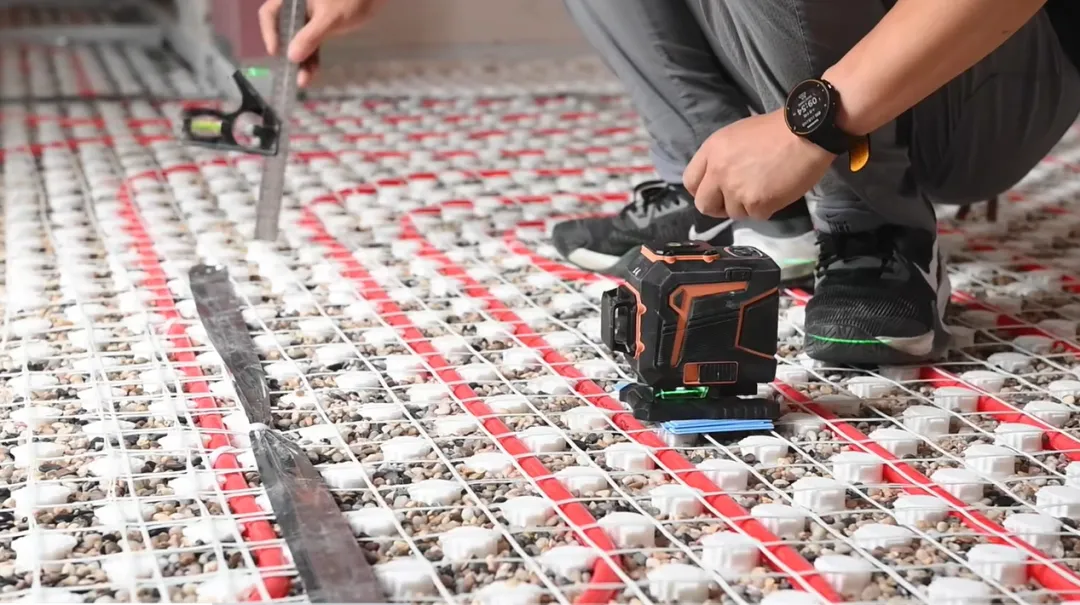
03 Step 3, Preparing the material
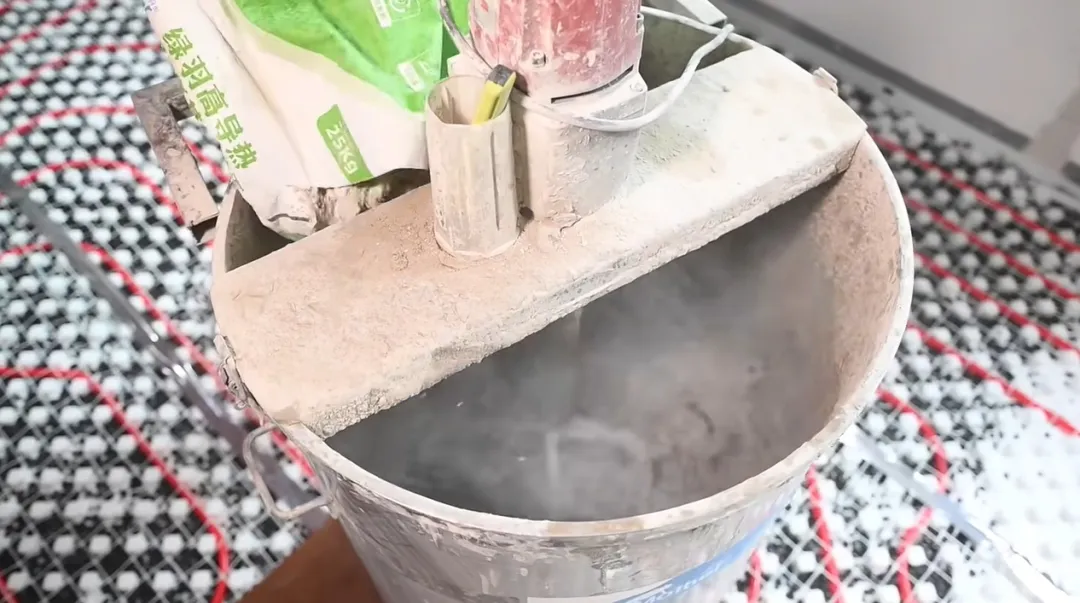
Pour into the mixer according to the ratio of water to material 1:5, mix for 3min, observe the state of the slurry to ensure no lumps.
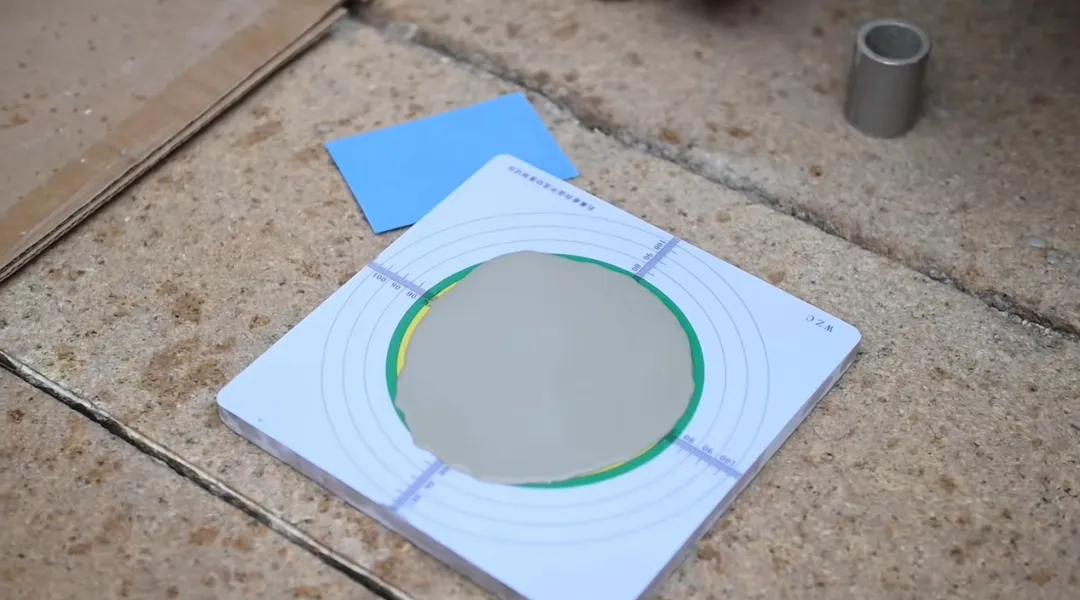
After mixing, do a fluidity test on the self-levelling slurry first to check whether it meets the construction requirements.
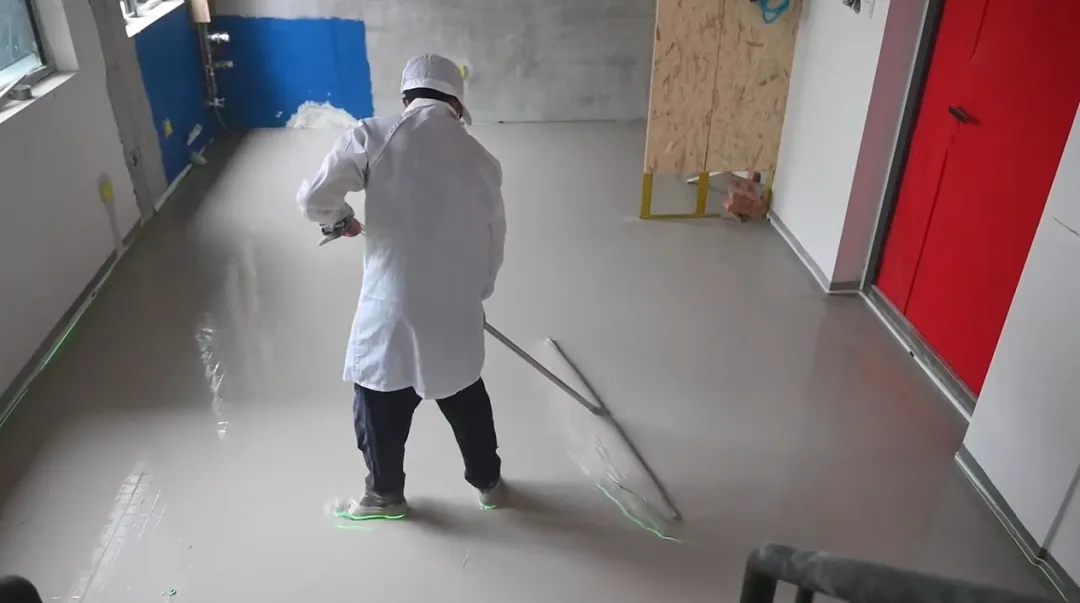
04 Step 4, Self-levelling Pouring
Placement: According to the construction height and other factors, the construction method of multiple layer-by-layer pouring is used.
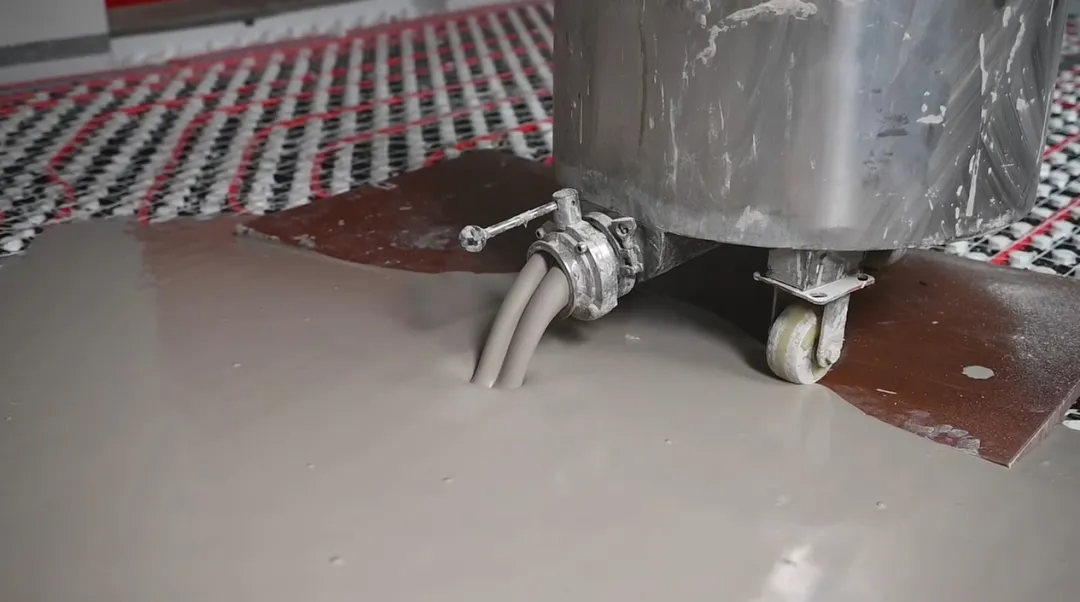
Scraping: Use a self-levelling scraper to assist spreading and control the construction thickness.
Defoaming: Use defoaming roller to defoam and fine-tune levelling from the inside out.
05 Step 5, Finished Product Protection
Closure of the construction area after completion of construction and waiting for the slurry to set and dry. It can be walked on after 4 to 6 hours under normal conditions.
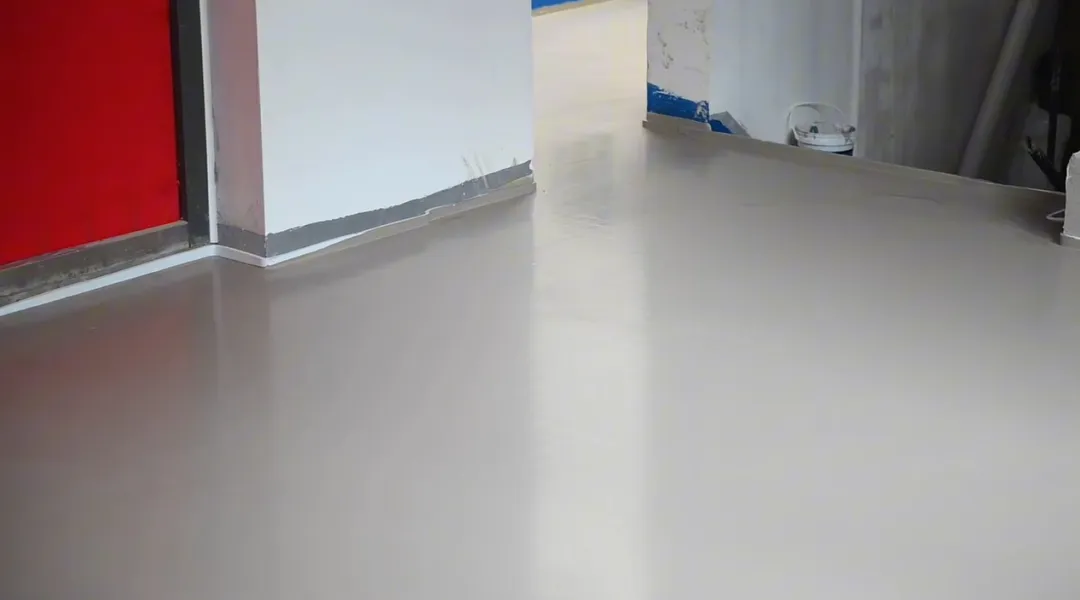
Backfill + Levelling in one solution, and no cracking, save floor height! Recommended for all those who are renovating and installing underfloor heating!~~~