How much does it cost to run dry floor heating for a month of heating? Is the heating effect good?
In the last installment, we covered how to choose a reliable dry floor heating module. So, how does dry underfloor heating work, is it comfortable? How much does it cost to turn it on for a month? This is the main concern of many homeowners.
With these two questions, we visited the owners who installed dry underfloor heating, learned about the use of underfloor heating in the field, and examined the relevant data, hoping to help you choose.
01 Case basic information
Building area: 140 square meters
Floor heating area: 95 square meters
Floor Heating Module: Earthmother AIR-EZ300 Light Aluminum Panel
Floor decoration layer: whole house wooden floor (balcony floor tile)
Wall-hung boiler water temperature setting: 45℃.
Floor heating temperature setting: 24℃
02 The effect of dry floor heating
When it comes to the effectiveness of use, there are factors to consider: how long does it take for the floor heating to reach the set temperature after it is switched on? Is the floor temperature evenly distributed?
Dry underfloor heating eliminates the need for a backfill layer and allows the floor to be laid directly (or thinly tiled). The heat emitted by the floor heating pipe acts directly on the ground, coupled with the aluminum layer of "thermal conductivity skills", the warming speed is faster compared to the wet floor heating, which is indisputable.
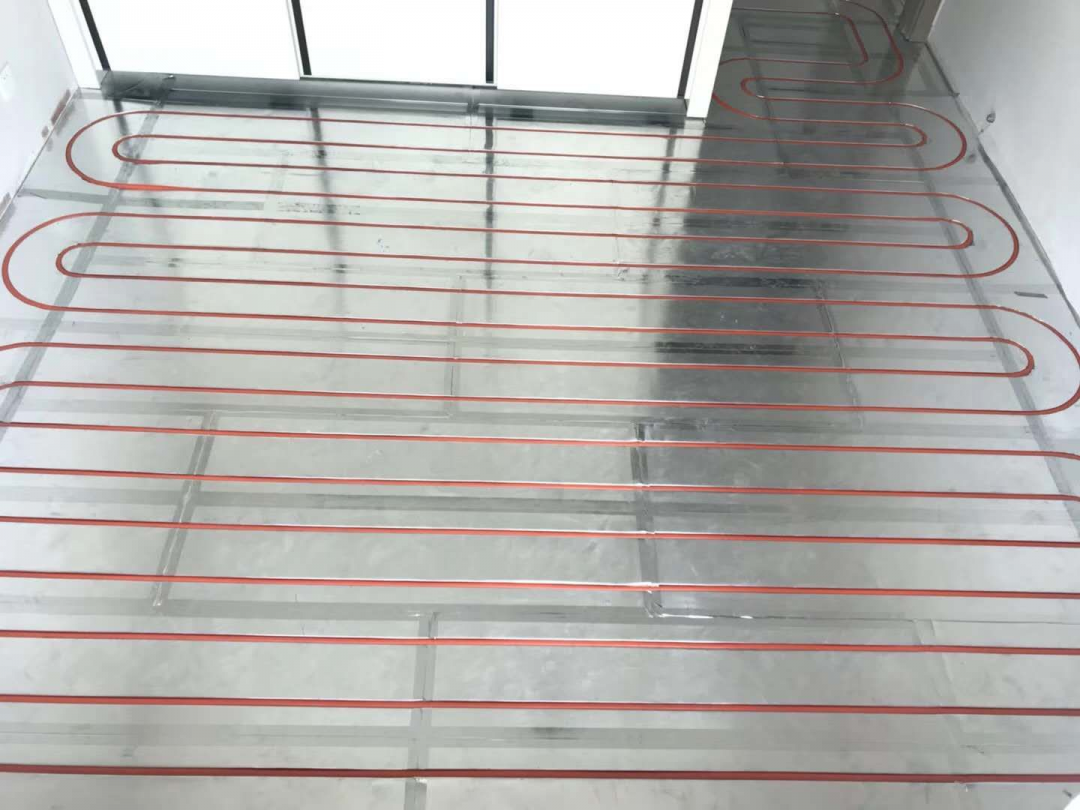
Dry underfloor heating laid to completion
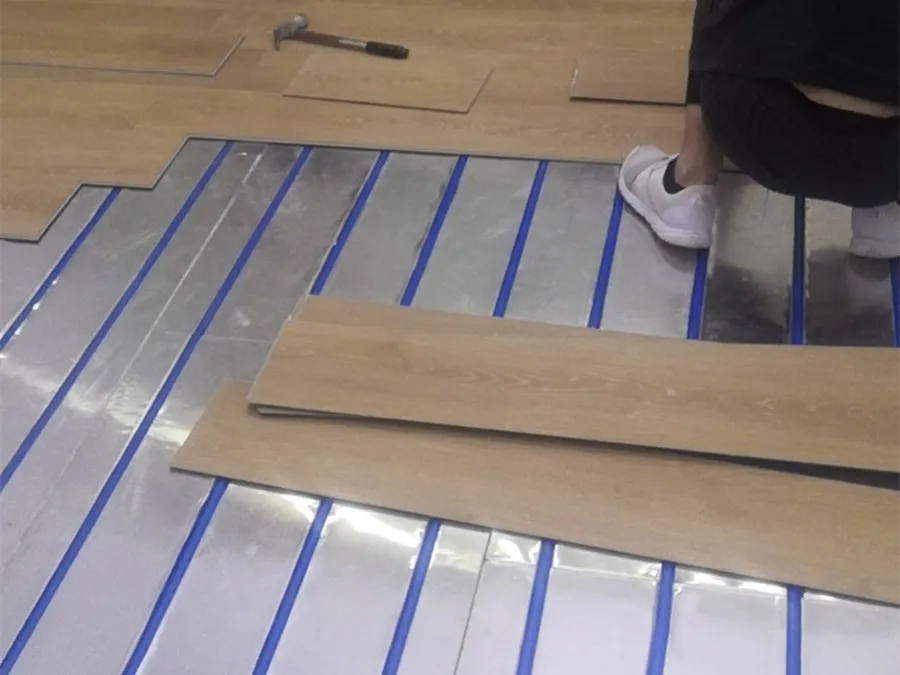
Possible Direct flooring (or thin tiles)
But also because there is no backfill layer of even heat role, the ground heat distribution is even to affect the use of dry floor heating effect of the key factors. This is closely related to the quality of the aluminum layer of the dry floor heating module, the thickness of the aluminum layer, and the way of the coil.
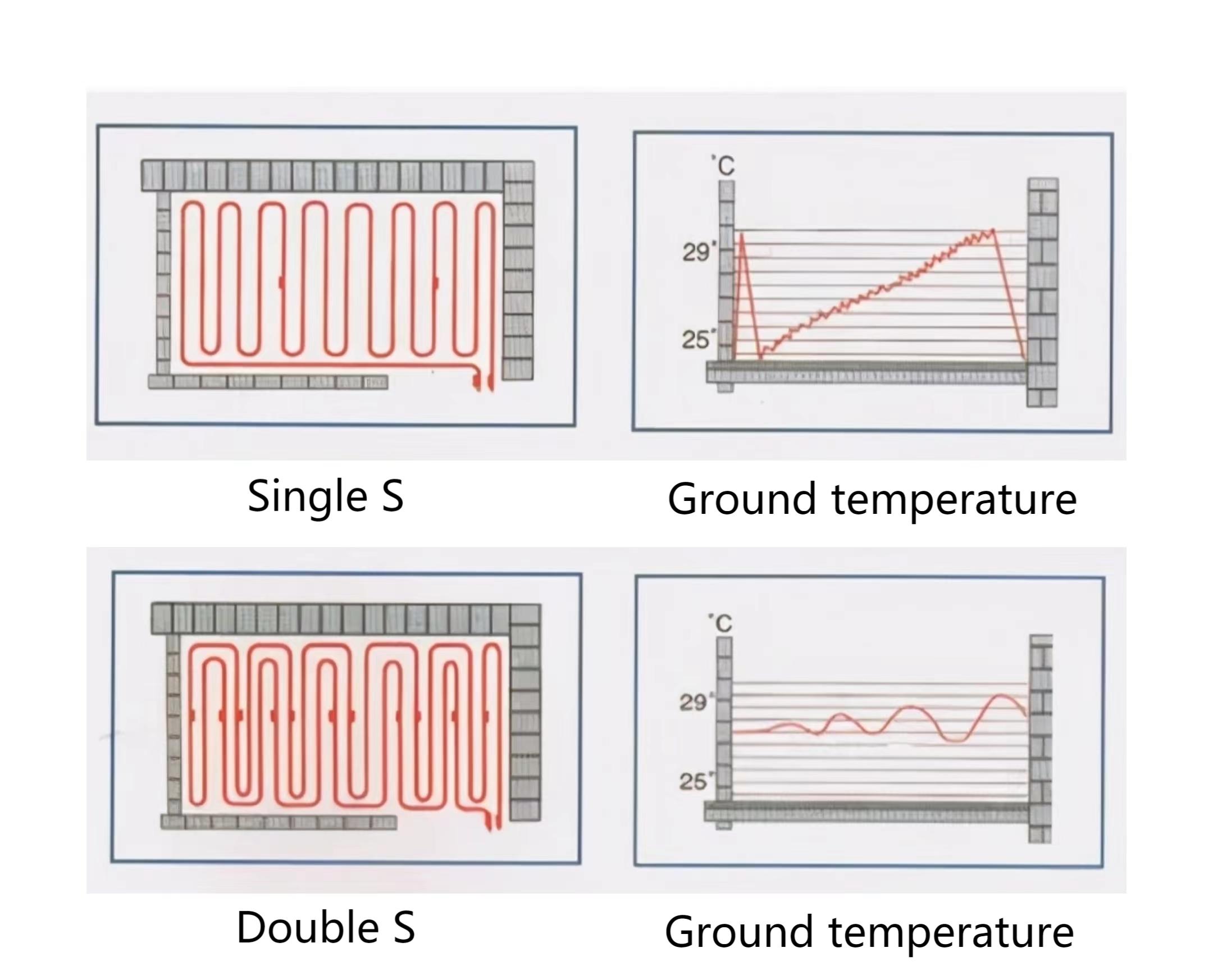
Influence of Different Coil Methods on Floor Temperature Distribution
Generally speaking, the aluminum layer is flat, bright, and of good quality, with a thickness of 0.3mm, and the heat uniformity effect will be better. As for the coil method, the heat uniformity of the spiral meander-shaped (double S) coil is much better than the meander-shaped (single S) coil. Single S coils are more likely to cause uneven heating and cooling on the floor.
The homeowner we visited had learned a great deal before the floor heating installation. The reason why he chose the Earthmother light aluminum plate, a very important reason is that the Earthmother light aluminum plate uses a double S coil design, the aluminum layer compared to other product quality is better, and the thickness meets the 0.3mm.
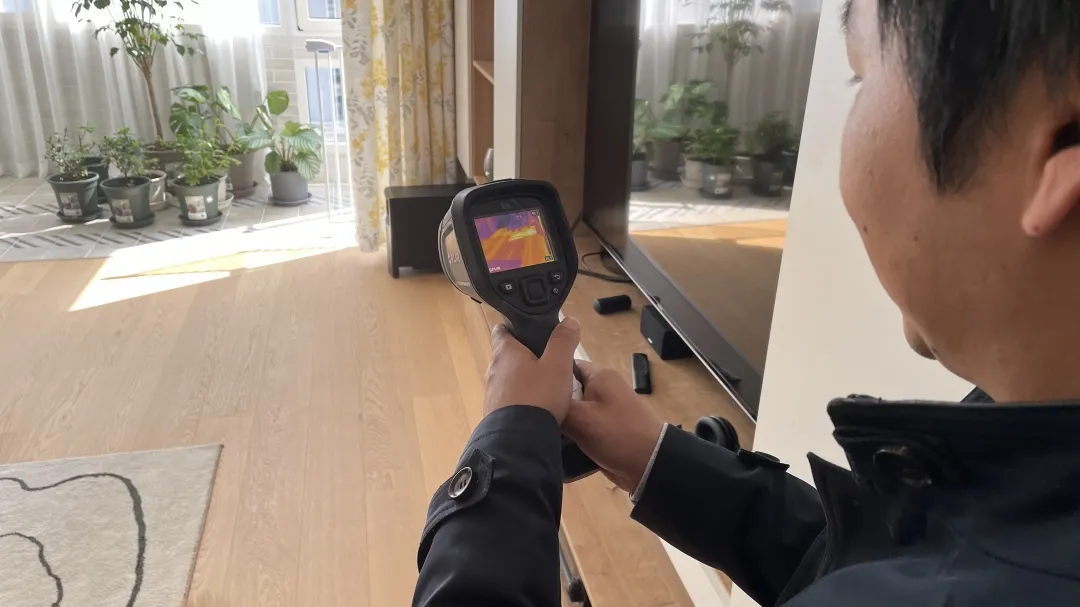
Technician testing in homeowner's home
On the day of the test, the outdoor temperature was 9°C and the indoor temperature was 14°C before the underfloor heating was turned on. One hour after the underfloor heating was turned on, the indoor temperature reached 24℃ and the ground temperature reached 28℃. The average time needed to warm up 10℃ was 0.5 hours, which can be said to be very fast compared to wet floor heating.
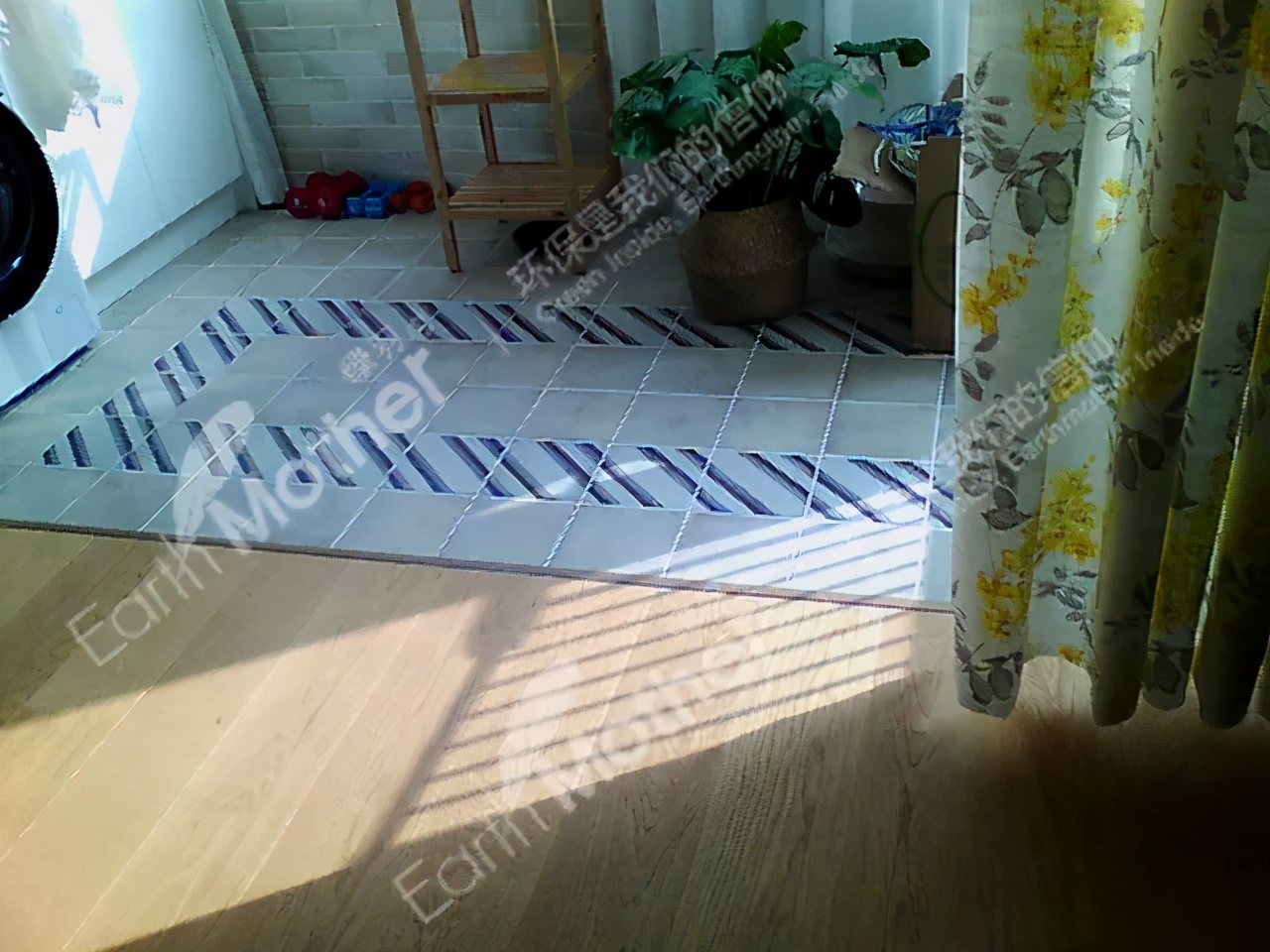
Balcony area (balcony is thinly tiled)
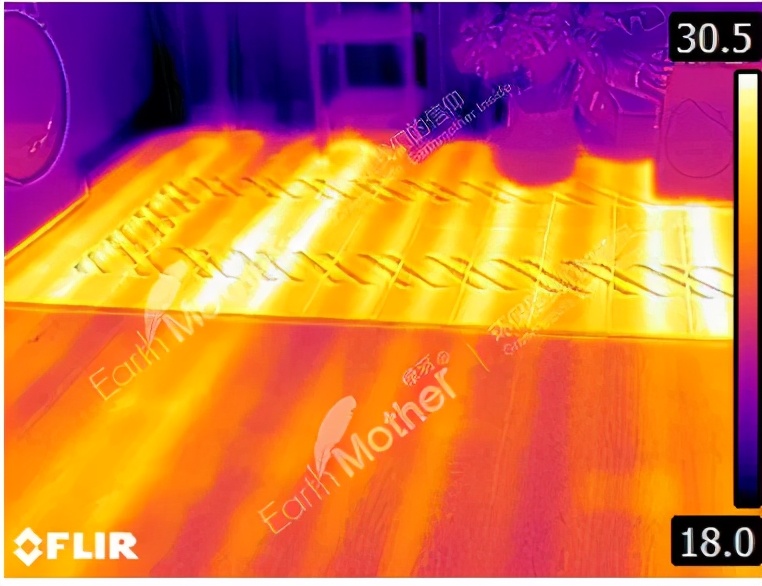
Thermal imaging camera display of balcony area
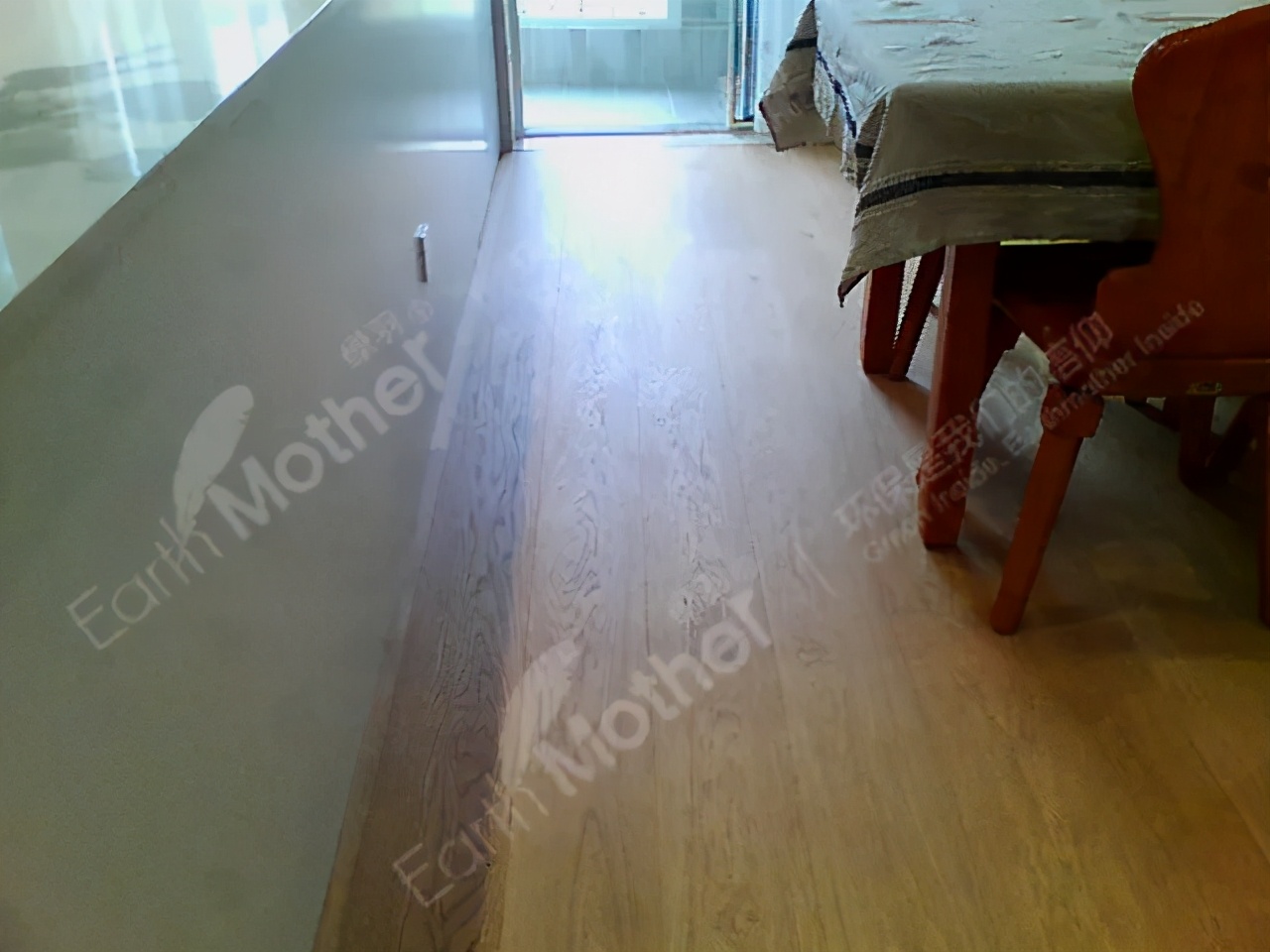
Indoor areas
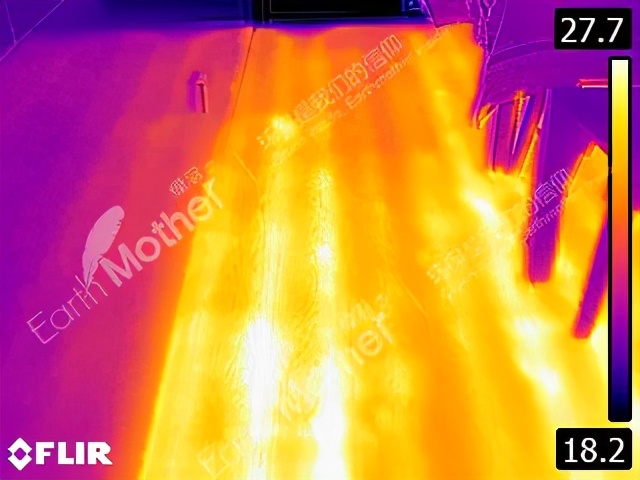
Indoor area thermal imager display
The above picture shows the heat distribution on the ground after the floor heating was turned on for 40 minutes, which was detected by the technician through the thermal imager. It can be seen that the heat emitted from the floor heating pipe is evenly applied to the ground through the light aluminum plate, and the temperature gap on the ground is small, and there is no uneven heating and cooling. According to the owner's feedback, the daily use experience is also uniform temperature and comfortable.
03 Costs of Dry Floor Heating
The owners we visited were a family of three. Every day, they turn off the underfloor heating when they go out and turn it on when they come home, with the room temperature set at 24°C.
According to the owners, this type of use is much simpler for them to operate, and there is no need to set the temperature for multiple time periods as in the case of wet underfloor heating, and a single on/off button solves the problem of use.
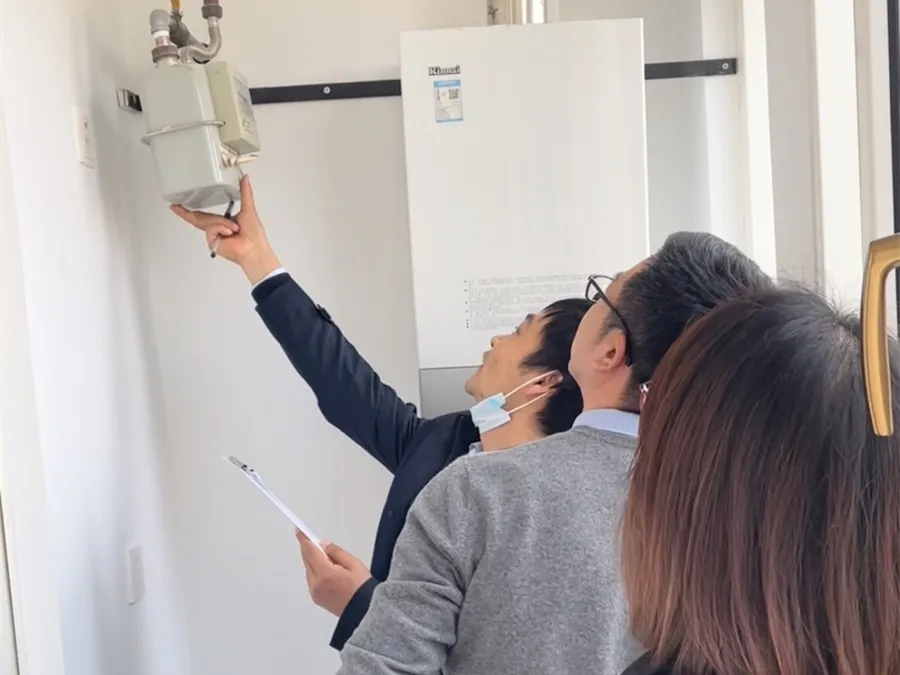
Technicians counting gas meter data
According to the statistics for a period of one month, the daily gas consumption of this owner's home is around 10m³ (including domestic hot water consumption for 3 persons). Based on the gas price of 4 RMB/m³, the gas bill is around 40 RMB per day. Deducting the domestic hot water part, the estimated gas cost for underfloor heating consumption is about 30 RMB per day. This cost is already very energy efficient for self-heating users in the south.
As we said earlier, the owner will turn on the underfloor heating about 1 hour after the room temperature can reach the set temperature, which can be understood as a "heating" process. After that, the energy consumption of underfloor heating only needs to be able to maintain the room temperature, which is a "maintenance" process.
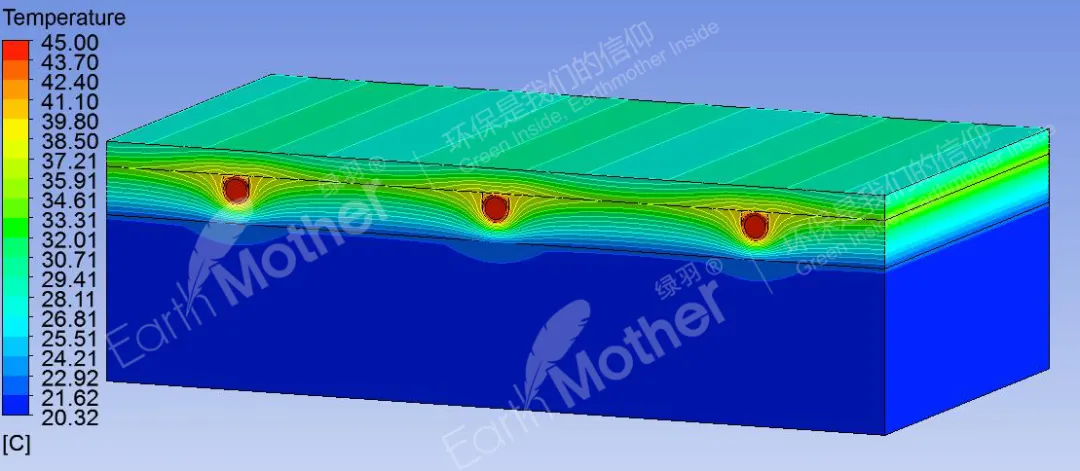
The greater the percentage of upward heat transfer, the more energy efficient it is
Therefore, it is only necessary to minimize the loss of heat during the "heating" and "keeping" processes, so that the heat remains in the room, and the energy saving effect can be achieved.
This puts demands on the insulation of the house, and the most important thing for underfloor heating is undoubtedly the insulation of the floor. Therefore, the insulation layer of dry floor heating modules must be of good quality and sufficient thickness in order to achieve the effect of reducing energy consumption.
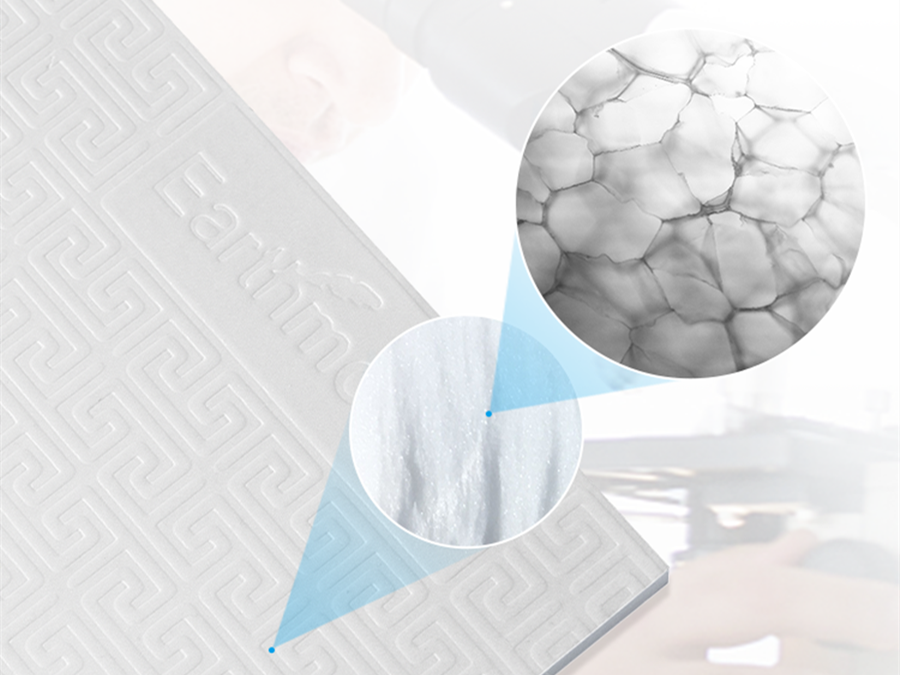
Light aluminum plate heat preservation layer with fine and uniform foam holes and good heat preservation effect
Case owners use the Earthmother light aluminum insulation layer for 3cm thick new material extrusion board (white crystal board), measured thermal conductivity is lower than 0.034w/(m-k), thermal insulation performance is very good, which is the key factor of the whole set of floor heating system energy saving.
04 Summary
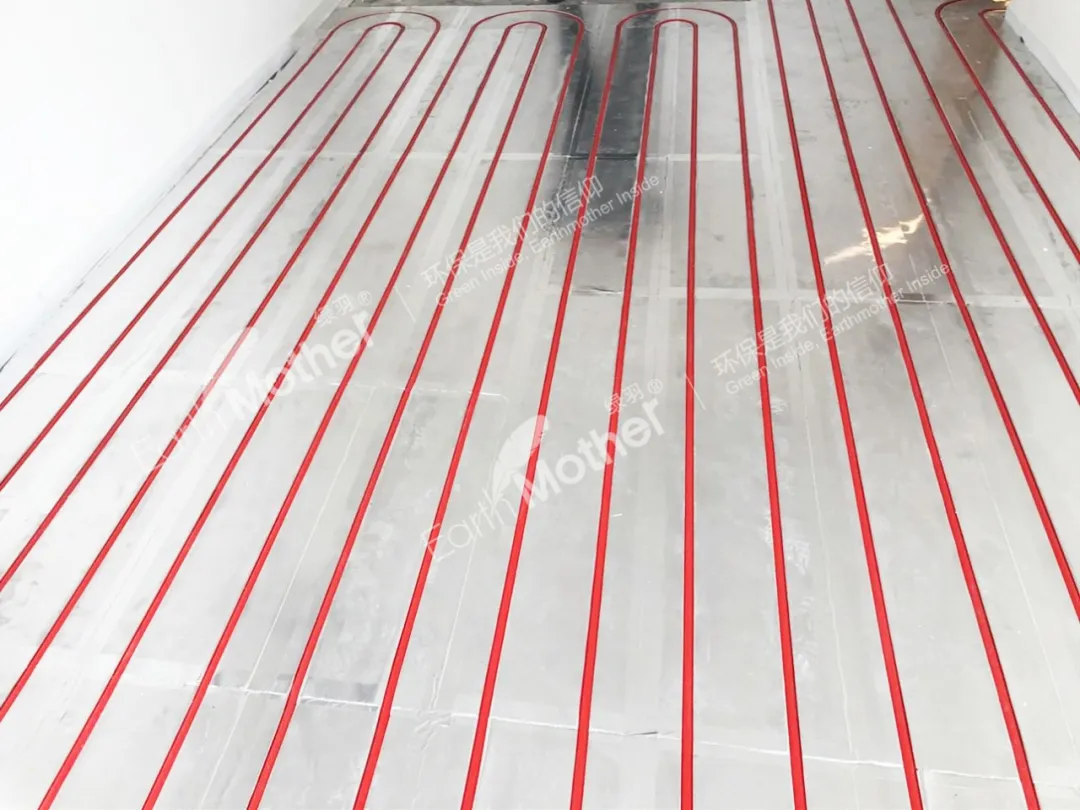
Earthmother Light Aluminum Panel Installation Completed
The quality of the floor heating module plays a decisive role in the effectiveness of dry floor heating. Therefore, when choosing materials, we must pay attention to the quality and strict construction specifications, so that we can avoid problems such as dry underfloor heating does not heat up, uneven heat, and abnormal noise.