ANSYS simulation demonstrates improved thermal insulation under typical residential heating conditions in China.
ANSYS Thermal Simulation
The Earthmother R&D Laboratory used ANSYS software to simulate and compare the thermal performance of Earthmother XPS Board PRO and conventional XPS Board under the same operating conditions.
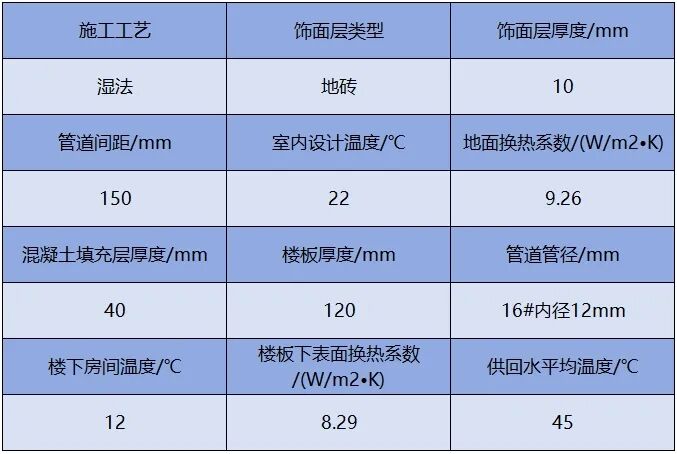
Table 1 – Simulation Conditions
Both products had the same thickness of 20 mm.
The simulation results are shown below.

Table 2 – Simulation Results
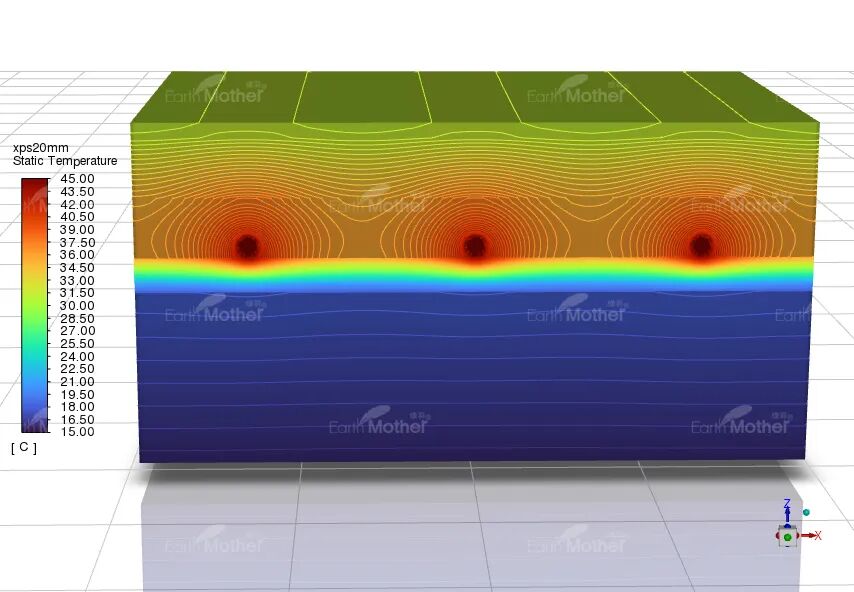
Temperature Distribution – XPS Board
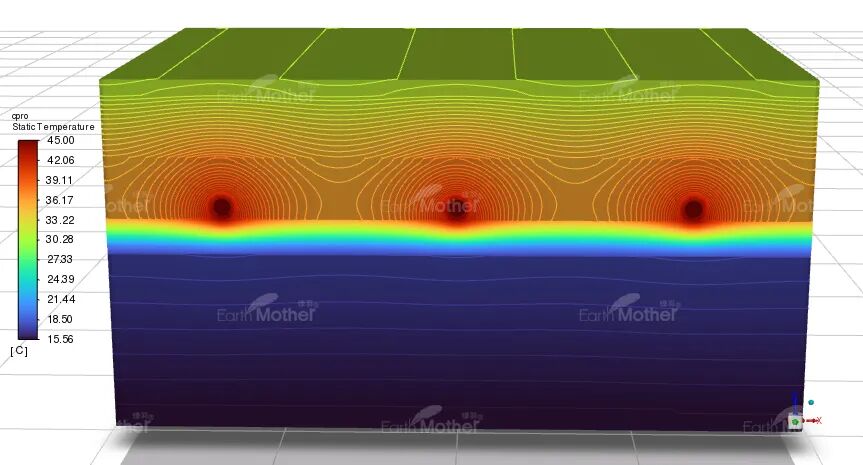
Temperature Distribution – XPS Board PRO
The simulation indicates that XPS Board PRO delivers higher upward heat transfer while reducing downward heat loss, resulting in improved thermal insulation performance.
Note: "Upward heat transfer" refers to the heat released from the finished floor surface into the indoor living space.
Estimated Energy Savings
To illustrate the potential energy-saving effect, a calculation was performed using typical residential heating assumptions in China, including:
· Heated floor area: 100 m²
· Natural gas calorific value: 8,600 kcal/m³
· Boiler thermal efficiency: 90%
· Energy conversion: 1 kWh = 860 kcal
· Boiler operating rate: 60%
· Heating season: 3 months
Based on the simulation results in Table 2, XPS Board PRO reduces heat loss by approximately 4.465 W/m² compared with conventional XPS Board.
Under the assumptions above, this corresponds to:
· Approximately 19.3 m³ of natural gas savings per month
· Approximately 57.9 m³ of natural gas savings over a typical three-month heating season
for a 100 m² residential heating area.
Disclaimer
The above figures are derived from ANSYS simulation results and calculation assumptions based on typical residential heating conditions in China. Actual energy performance and energy savings may vary depending on climate, building design, insulation level, heating system configuration, operating conditions, and local energy sources.